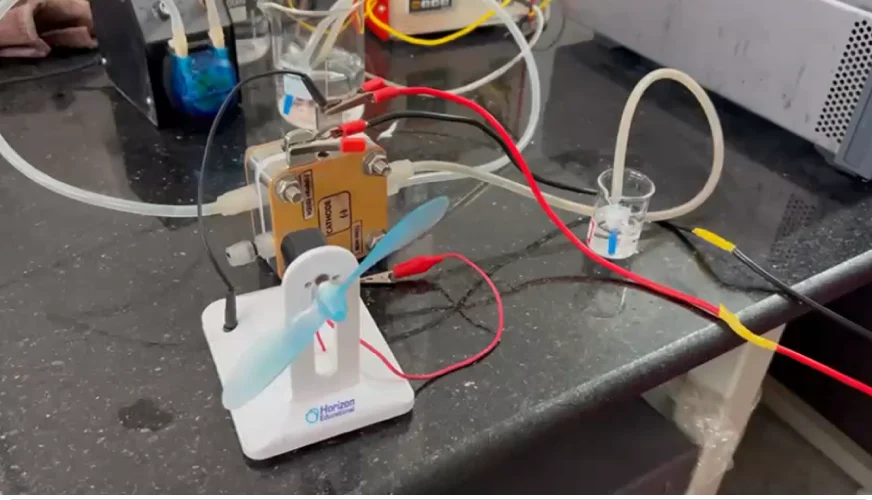
Featured · Direct ammonia fuel cells
Ammonia is more than a hydrogen carrier. Direct electrochemical conversion could eventually create another pathway from stored chemical energy to electricity.
8 min read · H2ONE Technical Insights · October 2026
01Ammonia fundamentalsWhy ammonia as an energy carrier?
Industrial logistics, hydrogen content, storage characteristics and the challenges that must be engineered.
Coming soon
02ElectrochemistryDirect ammonia fuel cells: converting NH₃ without an external hydrogen cracker
How an AEM DAFC differs from ammonia cracking followed by a hydrogen fuel cell.
Coming soon
03Scale-upWhy a 900 cm² fuel cell is not simply a bigger 25 cm² cell
Flow, heat, current distribution, sealing and compression.
Coming soon
04Digital engineeringSimulation-led fuel-cell development
Why MATLAB, COMSOL and structural modelling can reduce hardware iterations, but cannot replace validation.
Coming soon
05MobilityCan direct ammonia fuel cells power commercial three-wheelers?
A systems-engineering look at NH₃ storage, DAFC, DC/DC and the existing electric drivetrain.
Coming soon
06SafetyEngineering ammonia safety: contain, detect, isolate and control
Why ammonia systems need independent protection layers.
Coming soon