VAANVIZHI.
Eye of the sky.
A long-endurance surveillance aircraft designed from the start around H2ONE's direct-ammonia fuel cell. Launched by catapult, recovered by parachute, and powered in cruise by ammonia.
Battery for the edges.
Ammonia to stay up.
A pneumatic rail catapult puts the aircraft into the air, so it needs no lift rotors and no runway. In cruise the direct-ammonia fuel cell powers the pusher propeller, the avionics and the camera, and keeps the battery charged.
The battery covers the launch, the climb-out, the recovery and any emergency, so the aircraft can still come home and land if the fuel cell stops. It lands under a parachute onto two airbags. Target
Air-fed stack operation is the next validation gate. No ammonia-powered flight has been carried out.
One airframe.
Designed as a system.
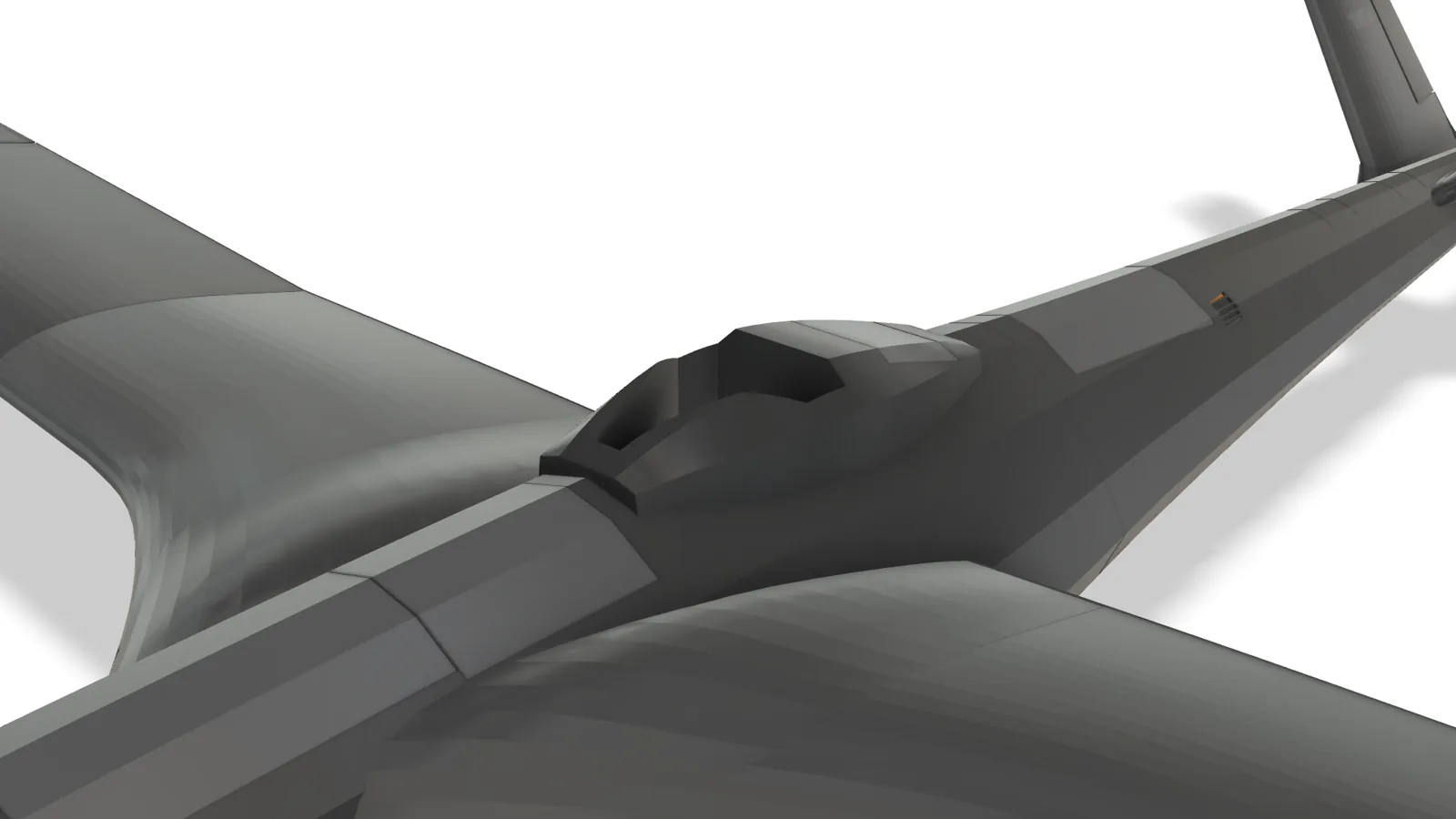
A chined body, a slender 6 m wing, a V-tail and a pusher at the tail cone. Moulded composite shells over a CNC-cut carbon spine, in pieces that plug, pin and latch together.
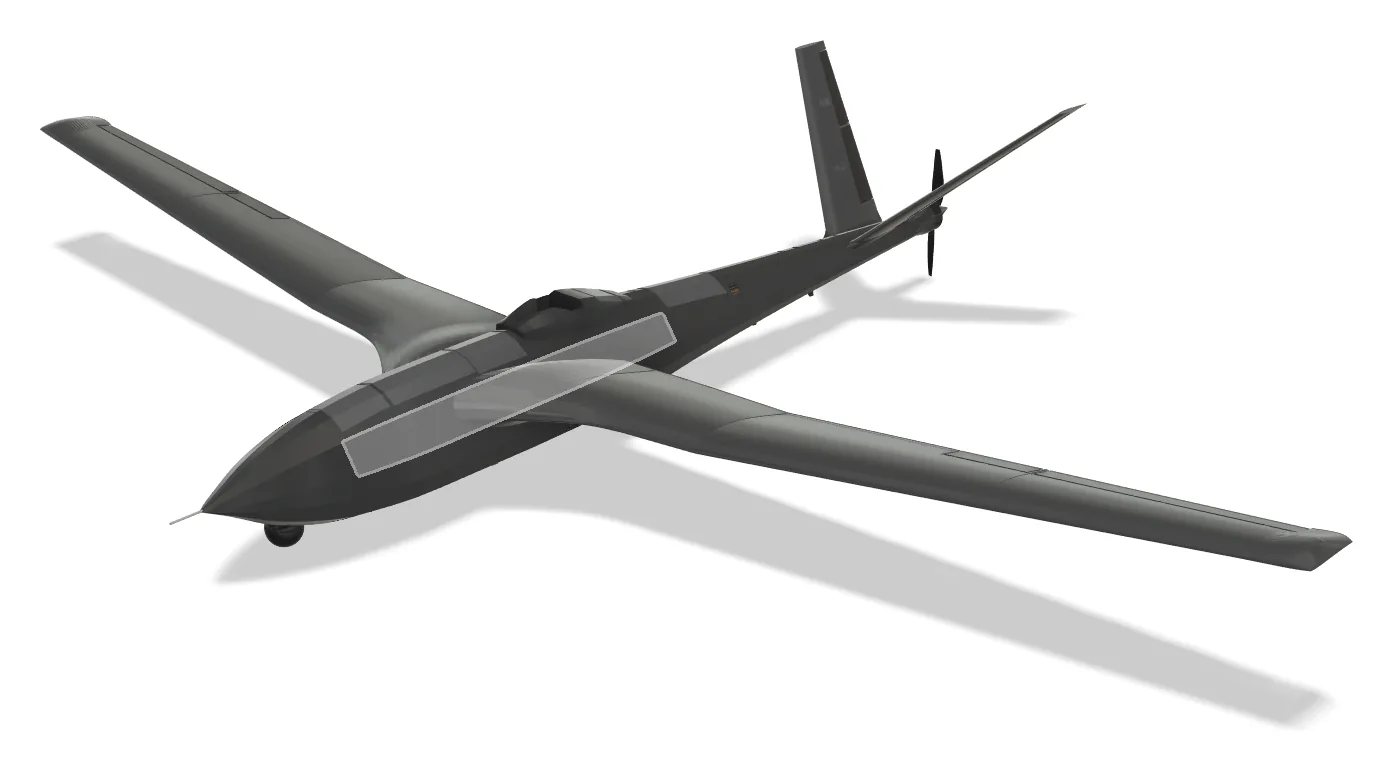
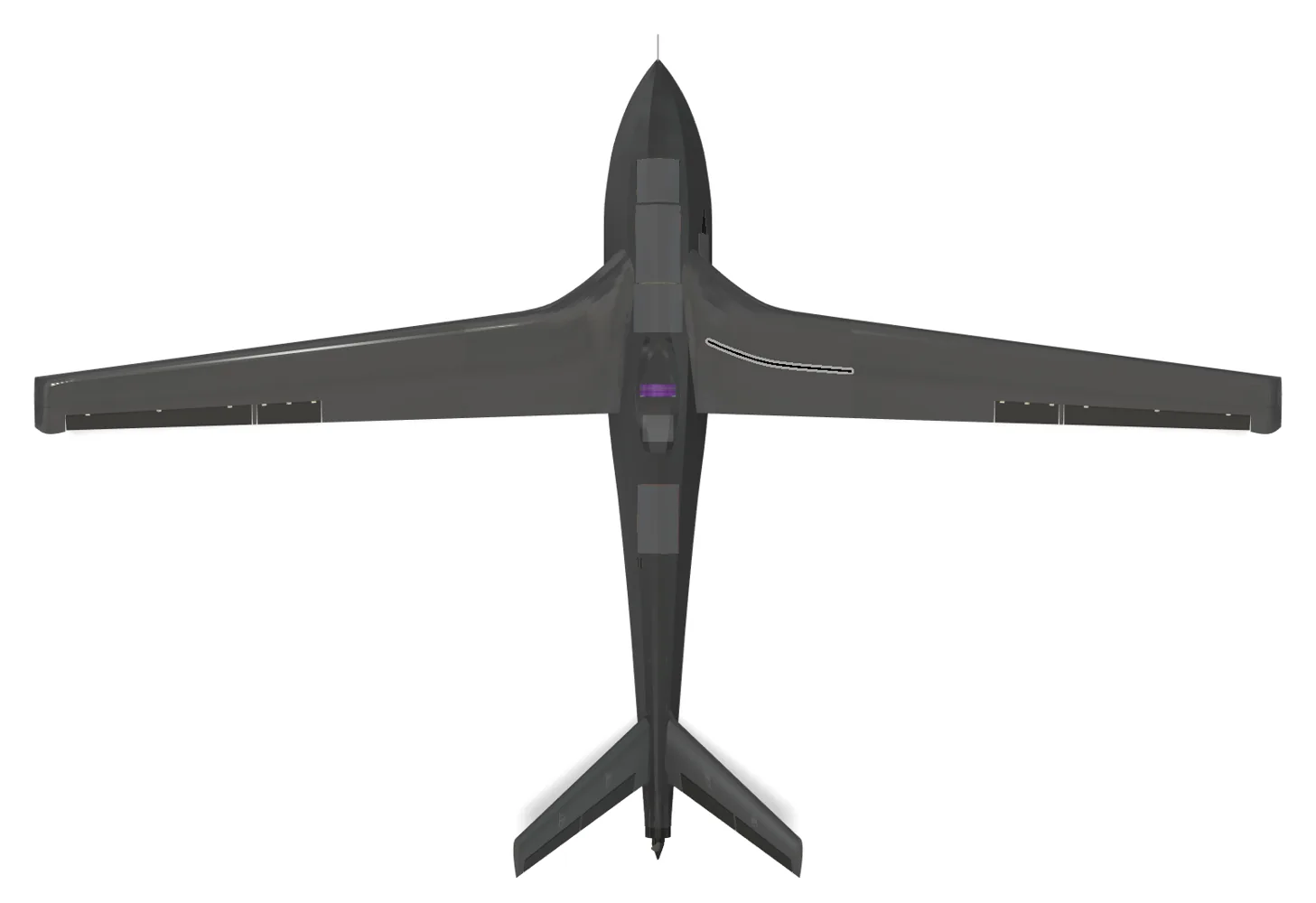
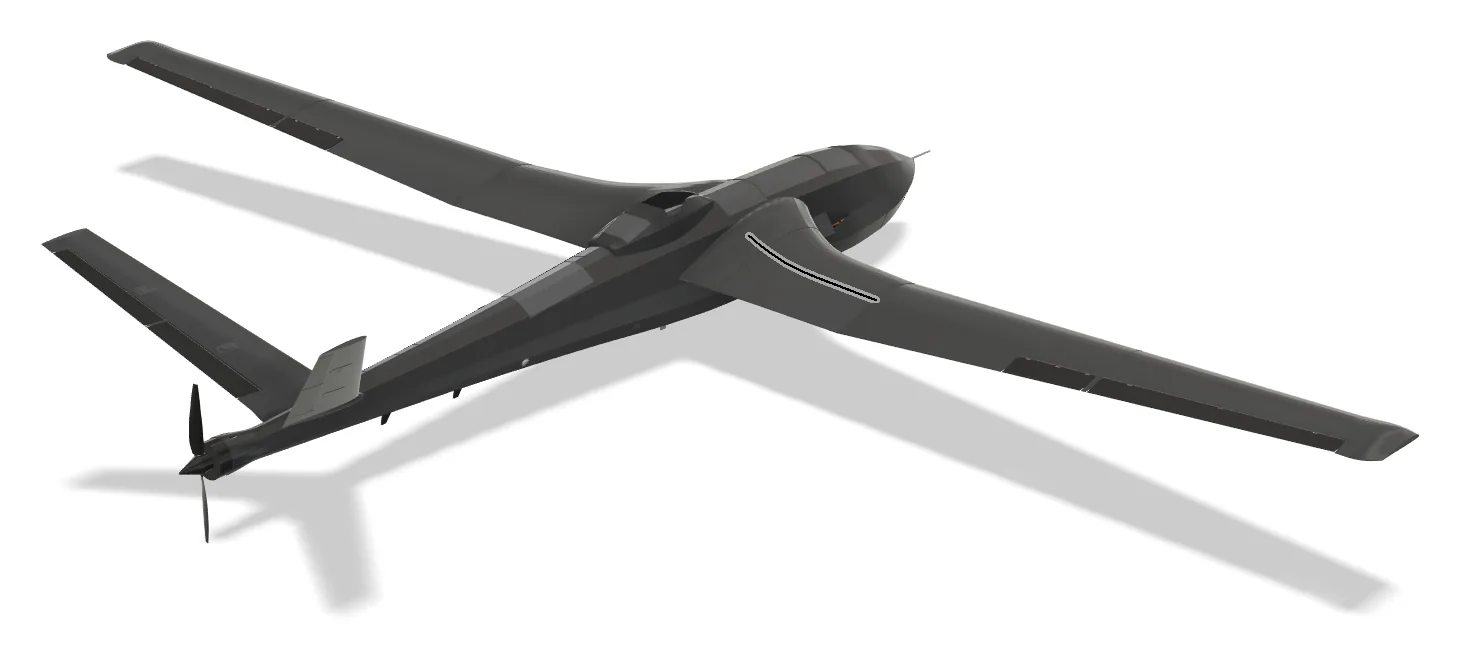
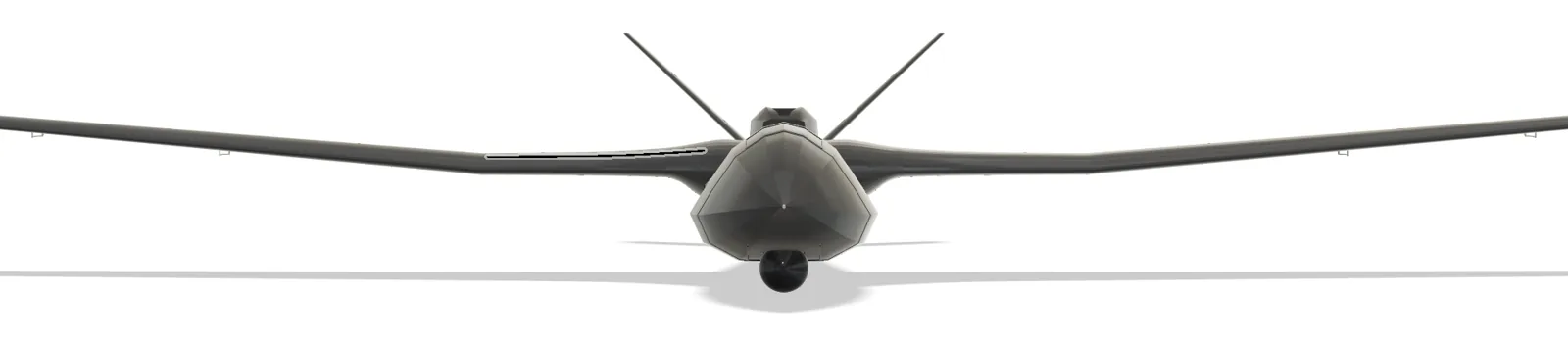
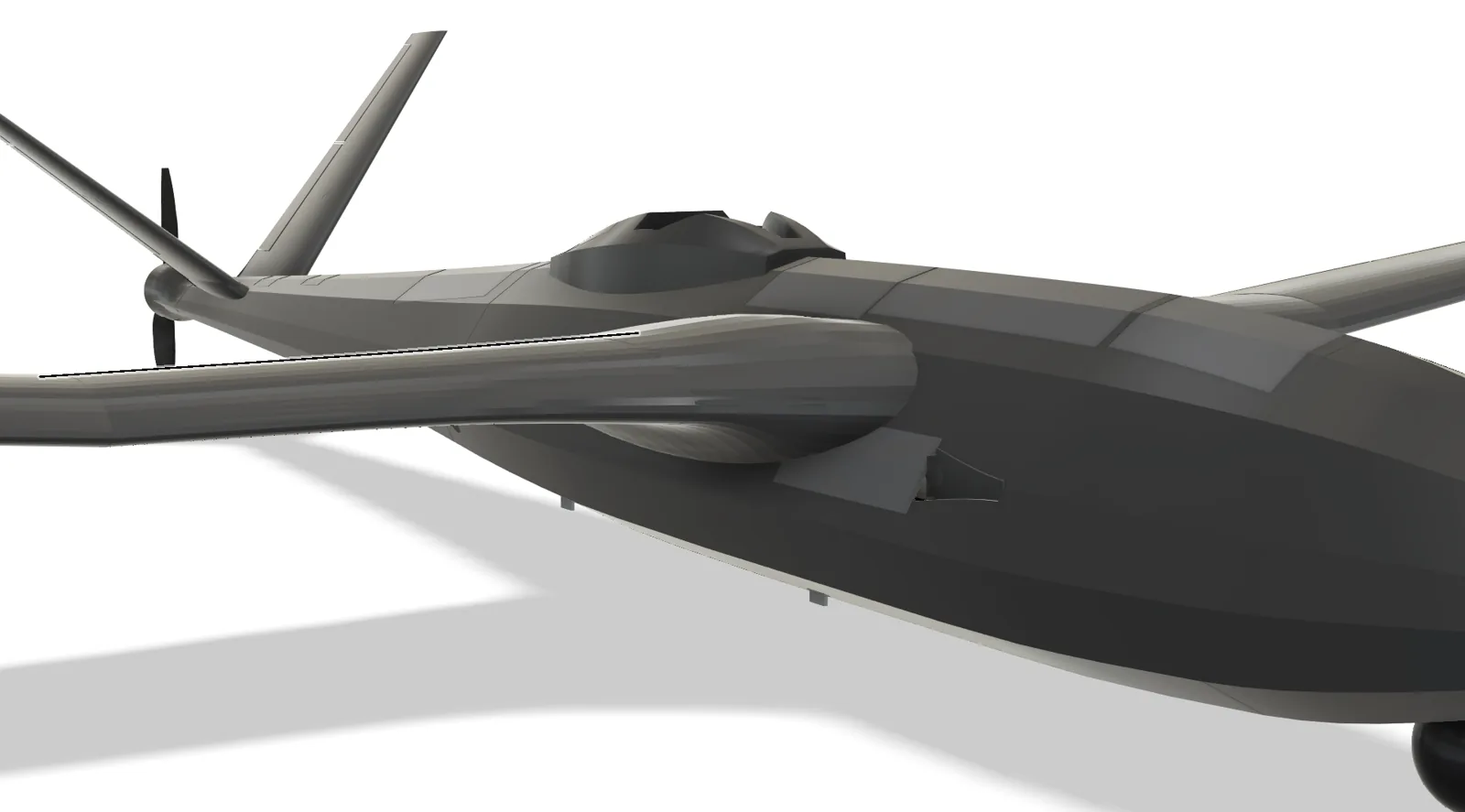
Modelled Fusion 360 CAD renders. Design concept; not flight hardware.
The numbers,
labelled honestly.
Principal figures of the current design point, from the CAD and the coupled mass, energy and thermal sizing. The design is not yet frozen, and none of these are flight-tested.
| Parameter | Value | Evidence |
|---|---|---|
| Wingspan | 6.0 m | Modelled CAD |
| Length | 3.8 m | Modelled CAD |
| Maximum take-off weight | ≈65 kg | Modelled Provisional sizing |
| Battery | ≈0.88 kWh Li-ion | Modelled Preliminary model |
| Ammonia | ≈3.6 kg usable | Modelled Preliminary model |
| Cruise speed | ≈81 km/h | Modelled Preliminary model |
| Payload | EO/IR gimbal camera, ≈1.1 kg | Source Source |
| Launch / recovery | Rail catapult / parachute and airbags | Modelled Design |
| Endurance | 3 to 4 hours | Target Target |
The endurance model uses assumed air-fed fuel-cell performance, 10 to 20 % below our measured pure-oxygen result. Every figure will be recalculated once the air-fed cell has been measured.
Engineered
inside out.
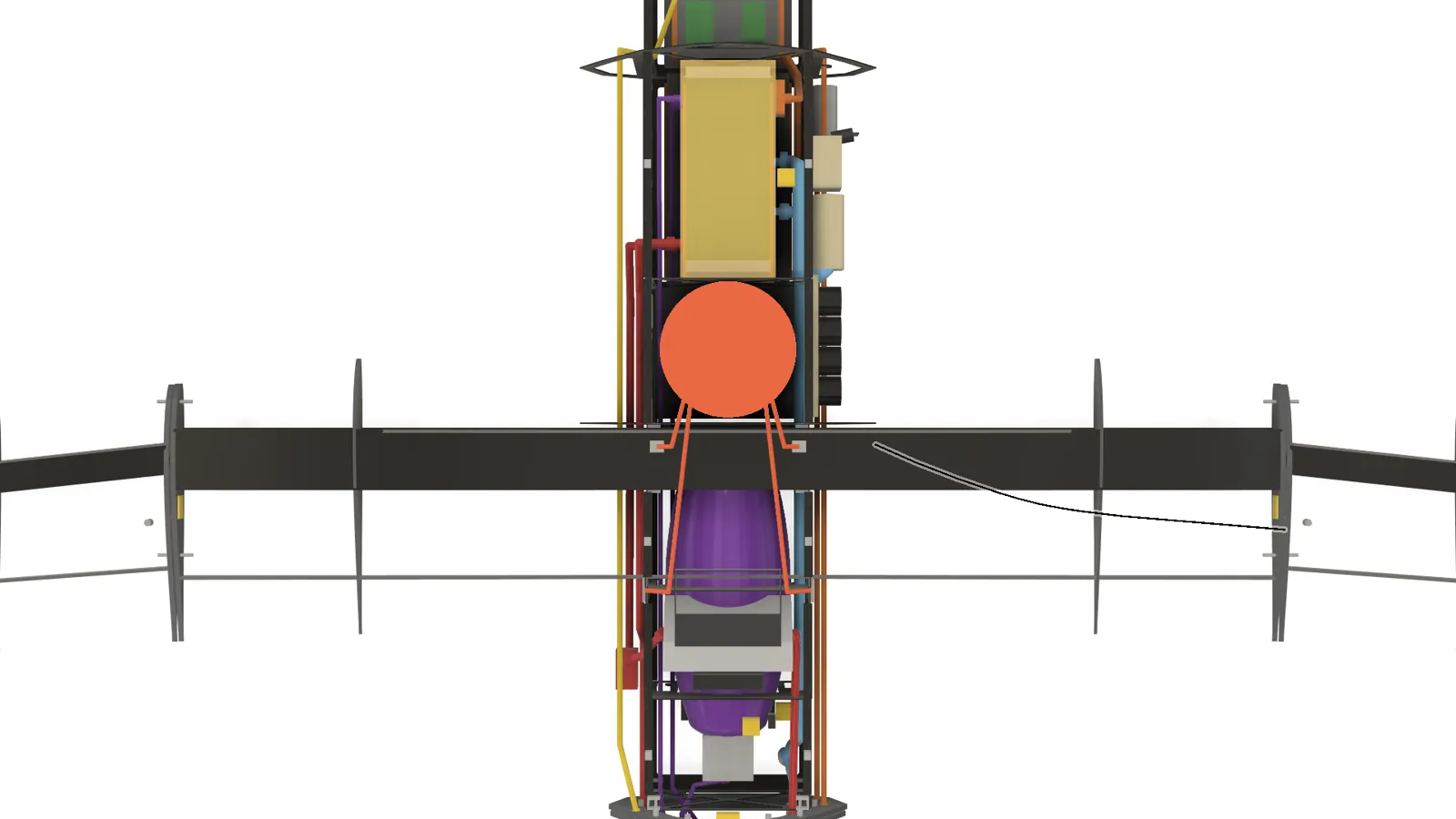
Fuel cell, ammonia tank, battery, cooling, avionics, parachute and payload each have their own bay on the spine. Their placement is set by the balance of the aircraft.
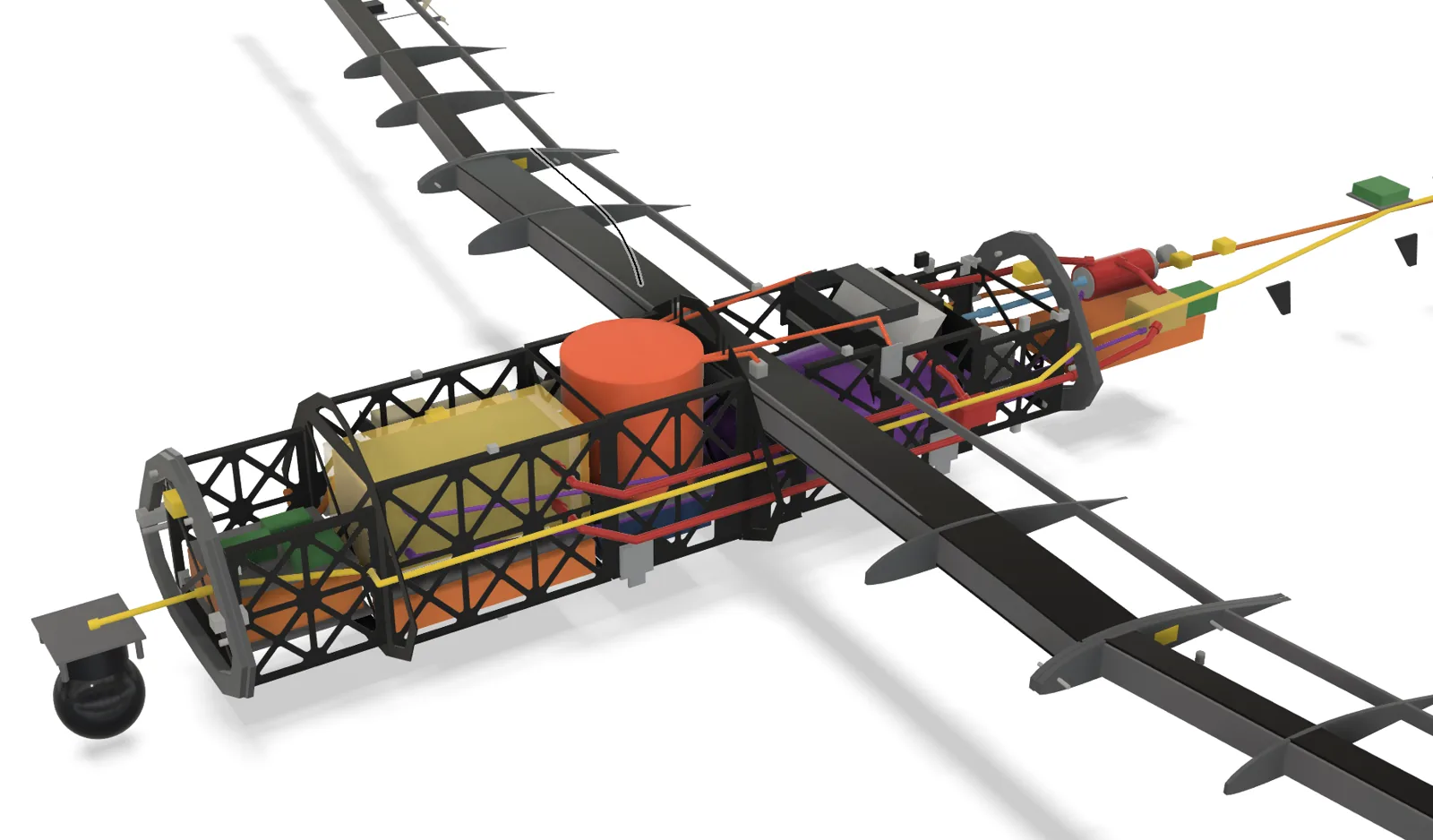
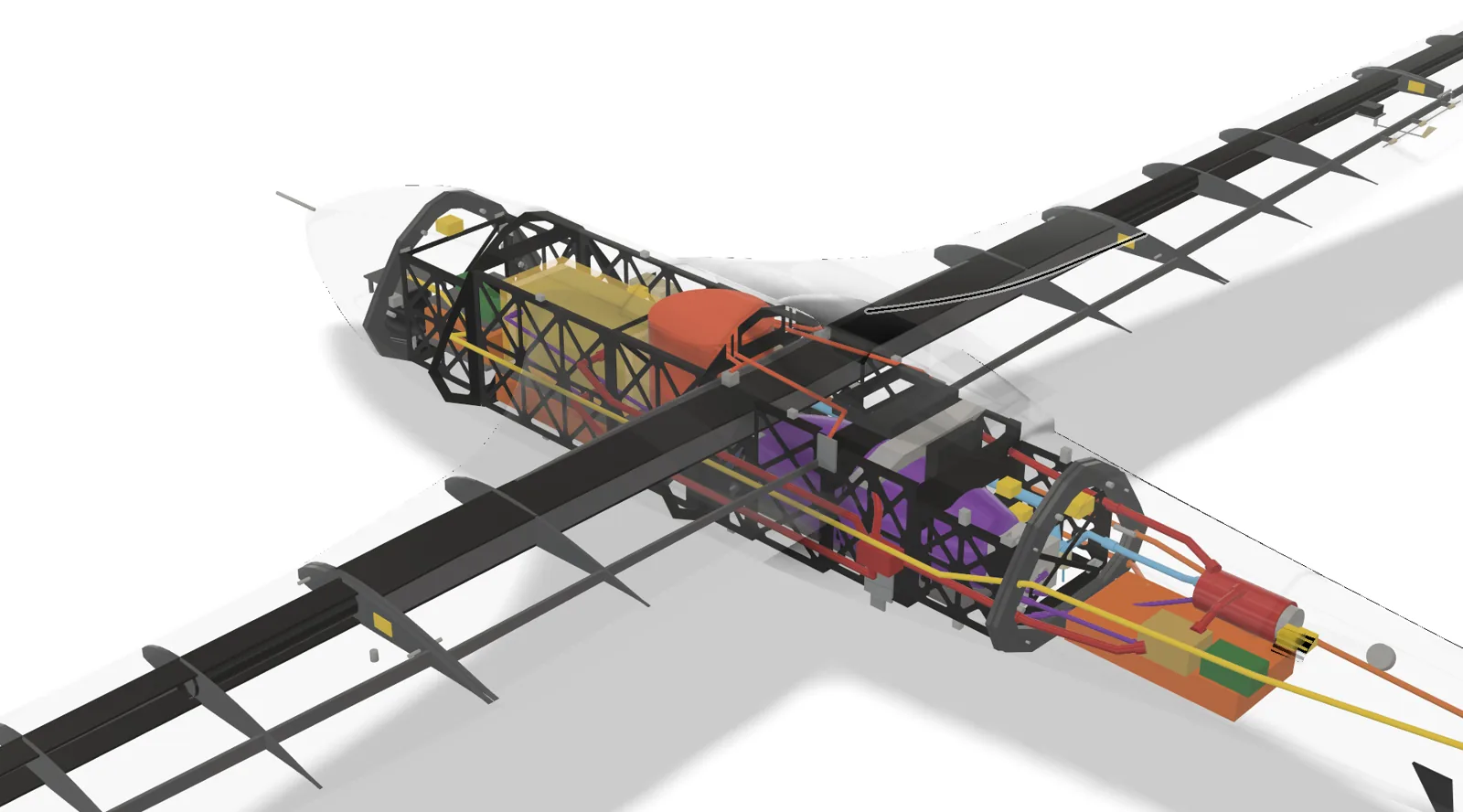
A runway
on a trailer.
A pneumatic rail catapult, designed in-house alongside the aircraft. It is towed to the site, unfolds and is pegged down, then launches the aircraft at about 20 m/s from a 5 m rail. No landing gear or lift motors ride along in flight.
Modelled Live 3D from the design CAD; drag to look around. The animation follows the design launch: a 12° rail, 3.3 m stroke and about 20 m/s at release, with the stroke slowed five times so it can be seen. It is an illustration, not test footage.
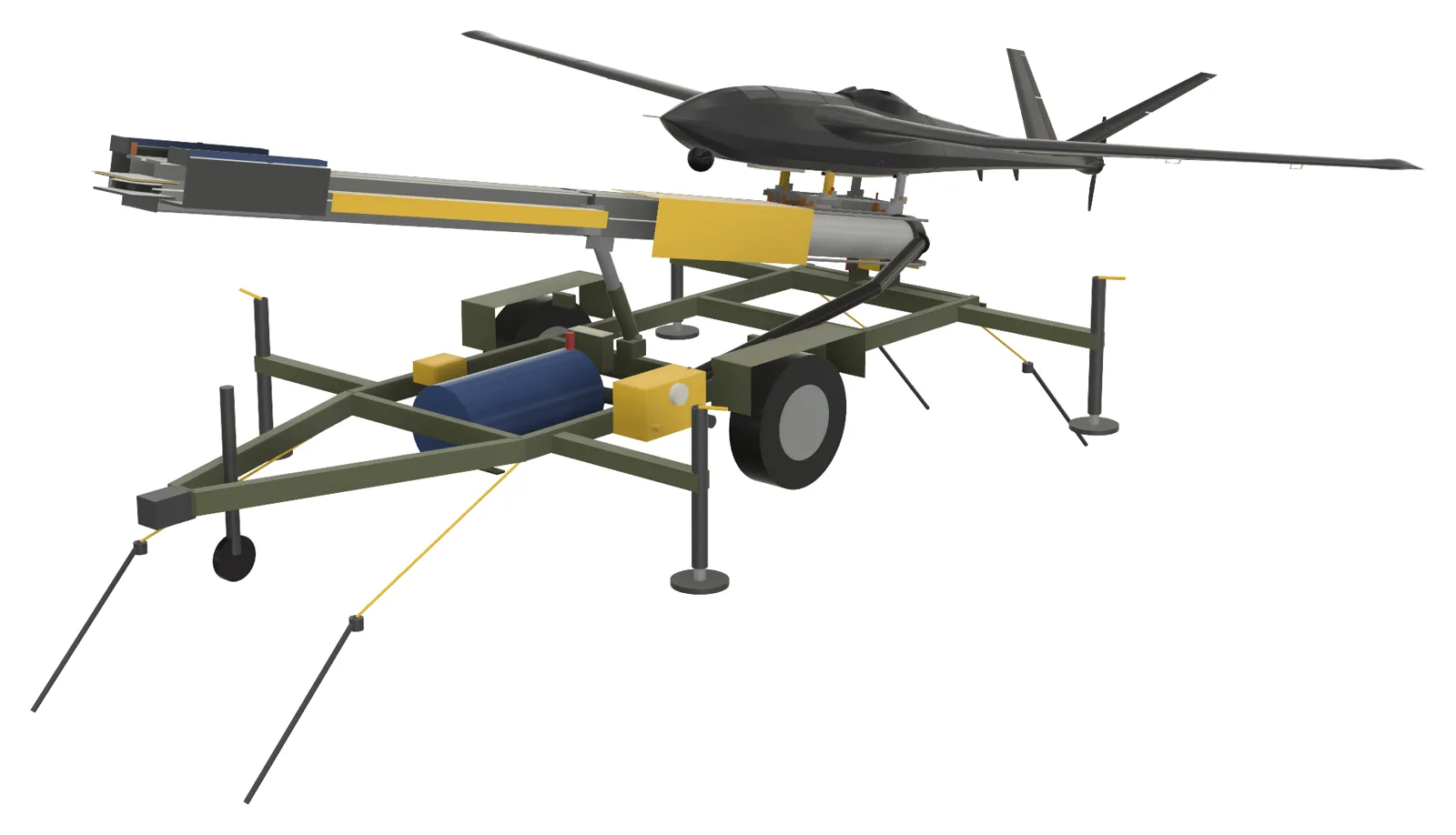
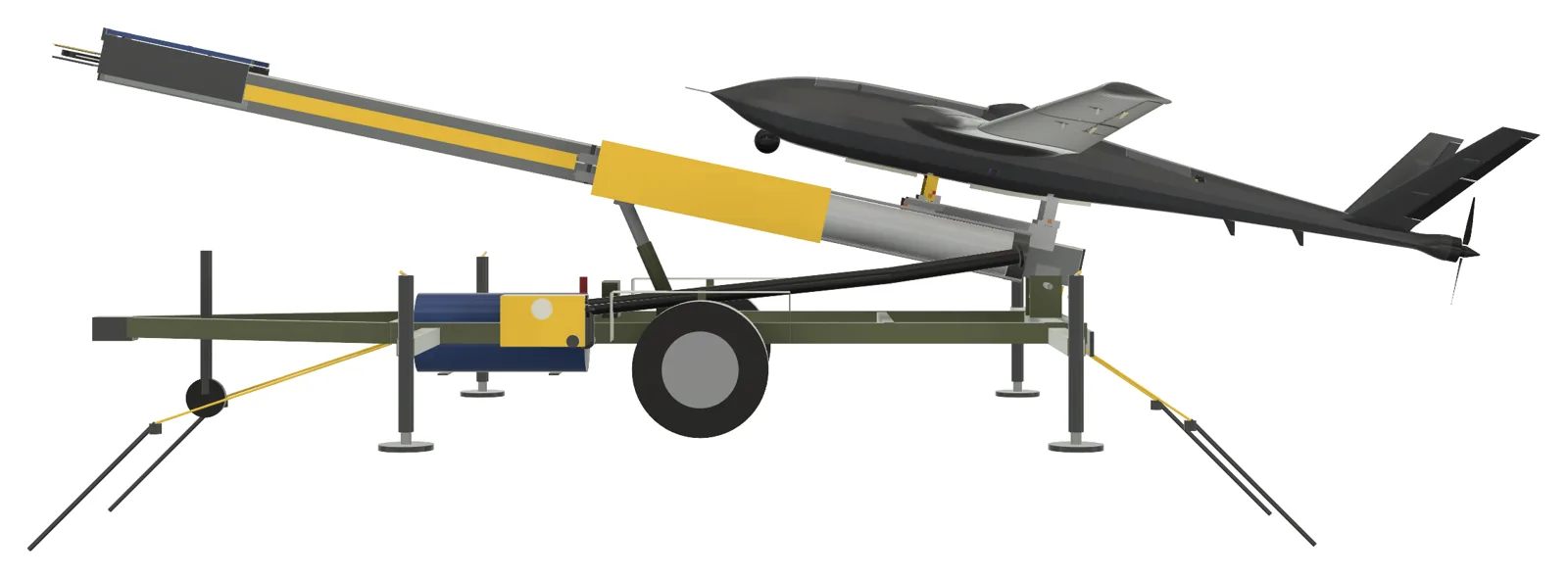
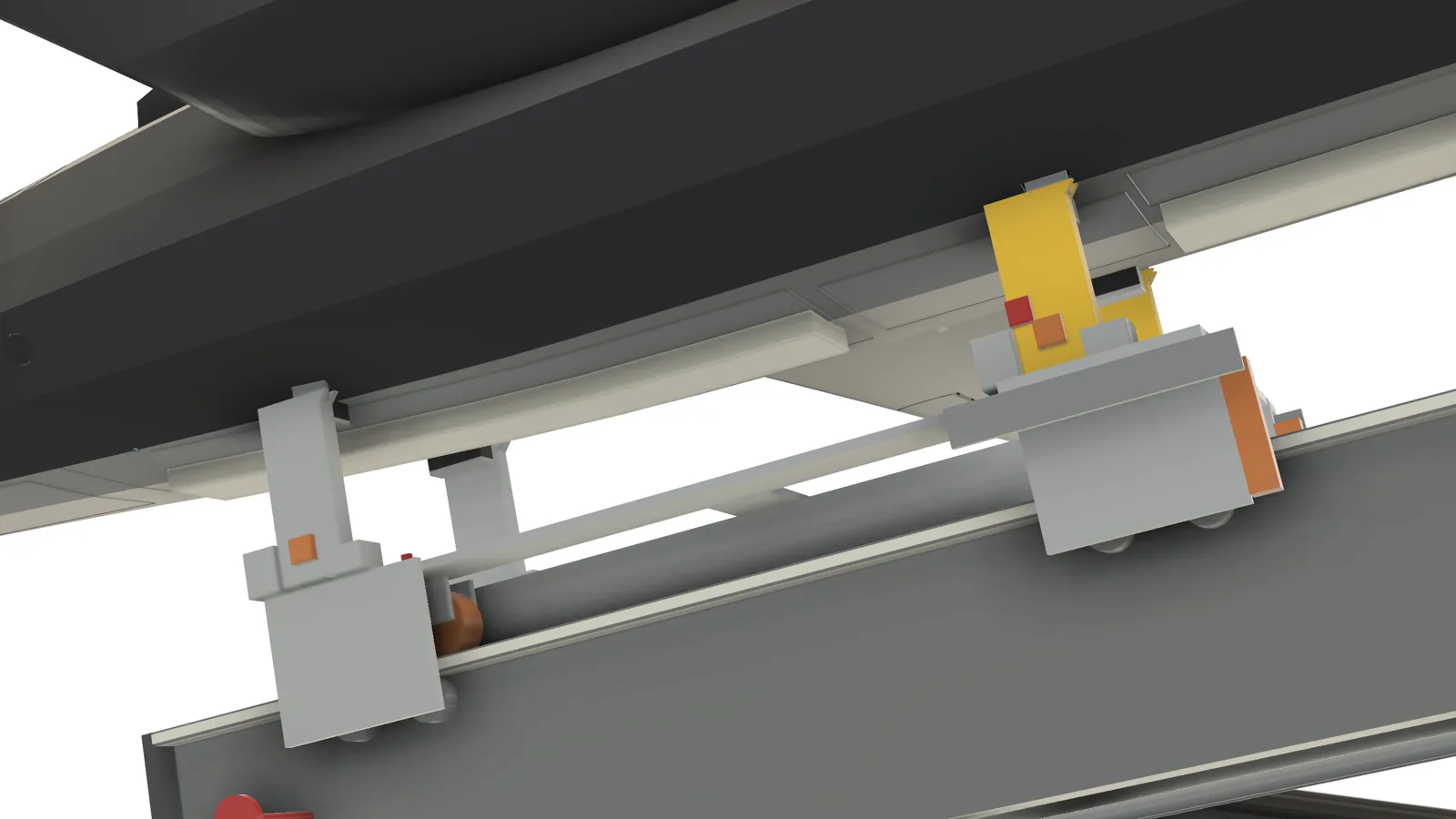
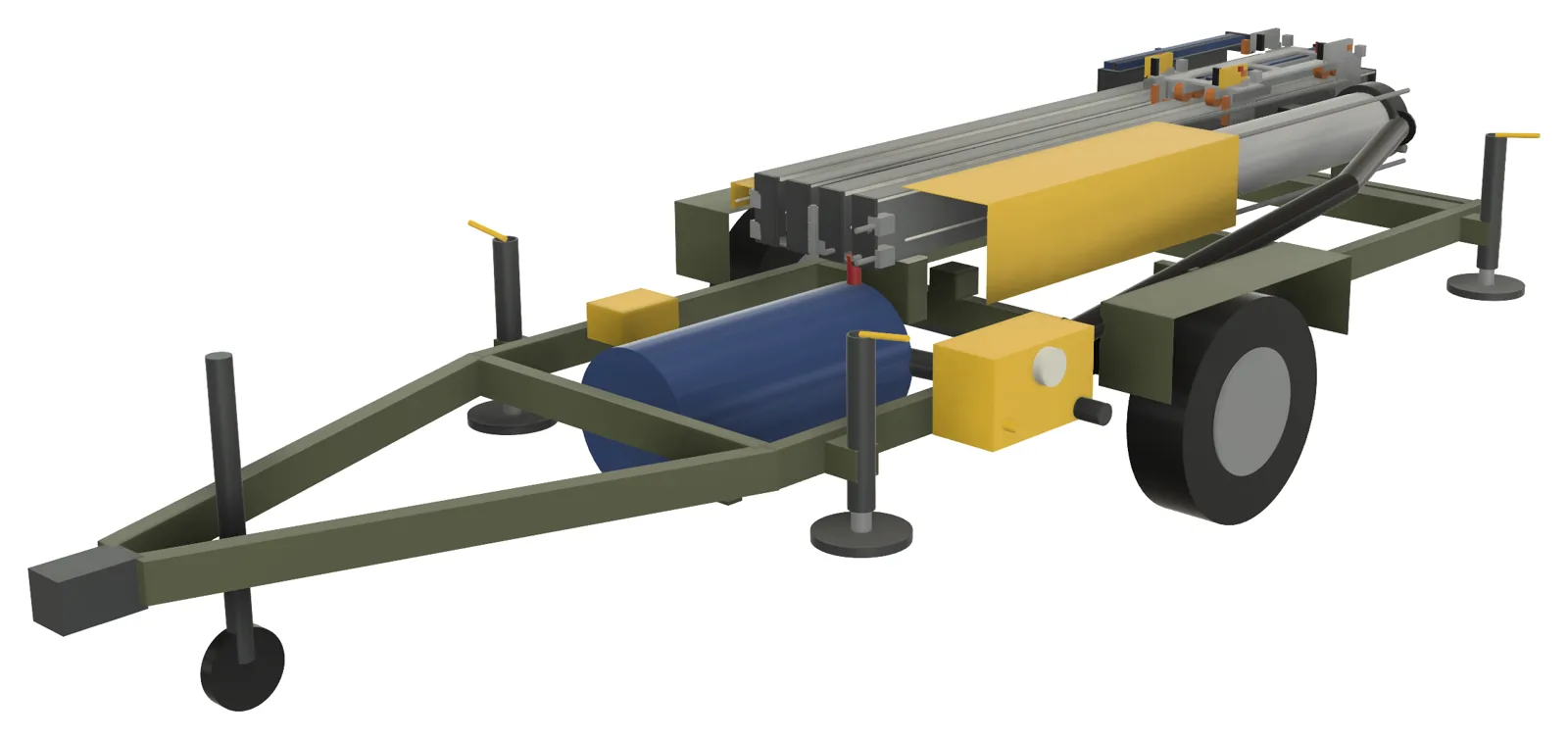
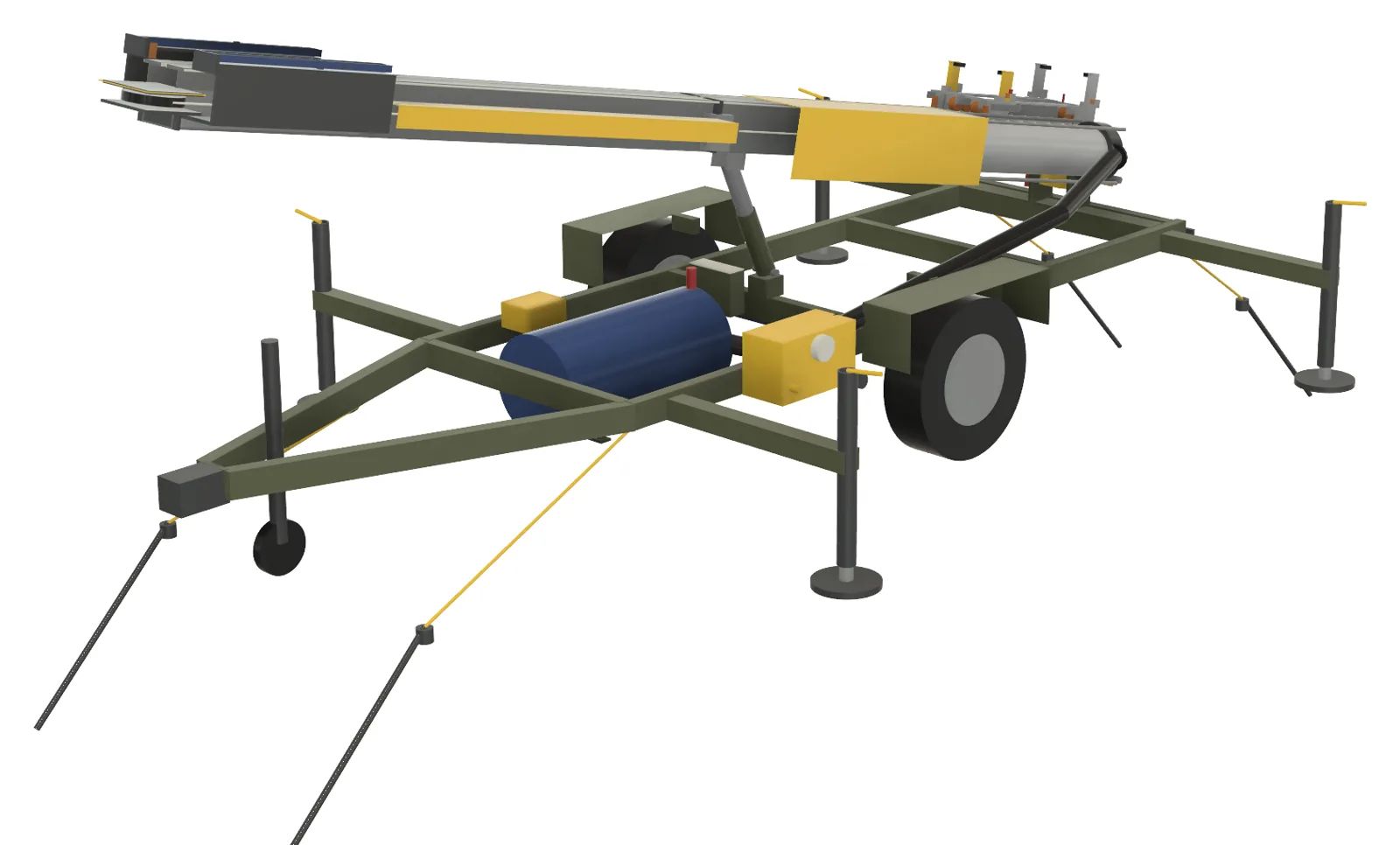
Modelled Fusion 360 CAD renders and calculated values. The launcher is a design: it has not yet been built, dry-fired or cleared for use with the aircraft.
Structure, recovery
and safety, designed in.
What exists today
- Complete aircraft assembly in Fusion 360, with every part, bay and fixture
- Sizing, mass, balance, energy and thermal models linked to the CAD
- Hand calculations of the carbon spine for launch, parachute, airbag and flight loads
- Concept design of the pneumatic rail launcher
- Ammonia safety designed in: a ventilated tank bay, gas sensors, and an oxidiser that burns the unused fuel so no ammonia is released
The design is not yet frozen, structurally qualified or flight-certified.
What comes next
- Air-fed DAFC cell, then a short stack on the bench
- Recalculate the aircraft on the measured cell data, then freeze the design
- Finite-element analysis of the frozen design, then structural test articles
- Certified ammonia tank, with statutory approval before flight
- Launcher build and dry-fire tests; integrated ground test of the power system
- Flight testing only where authorised, after safety review
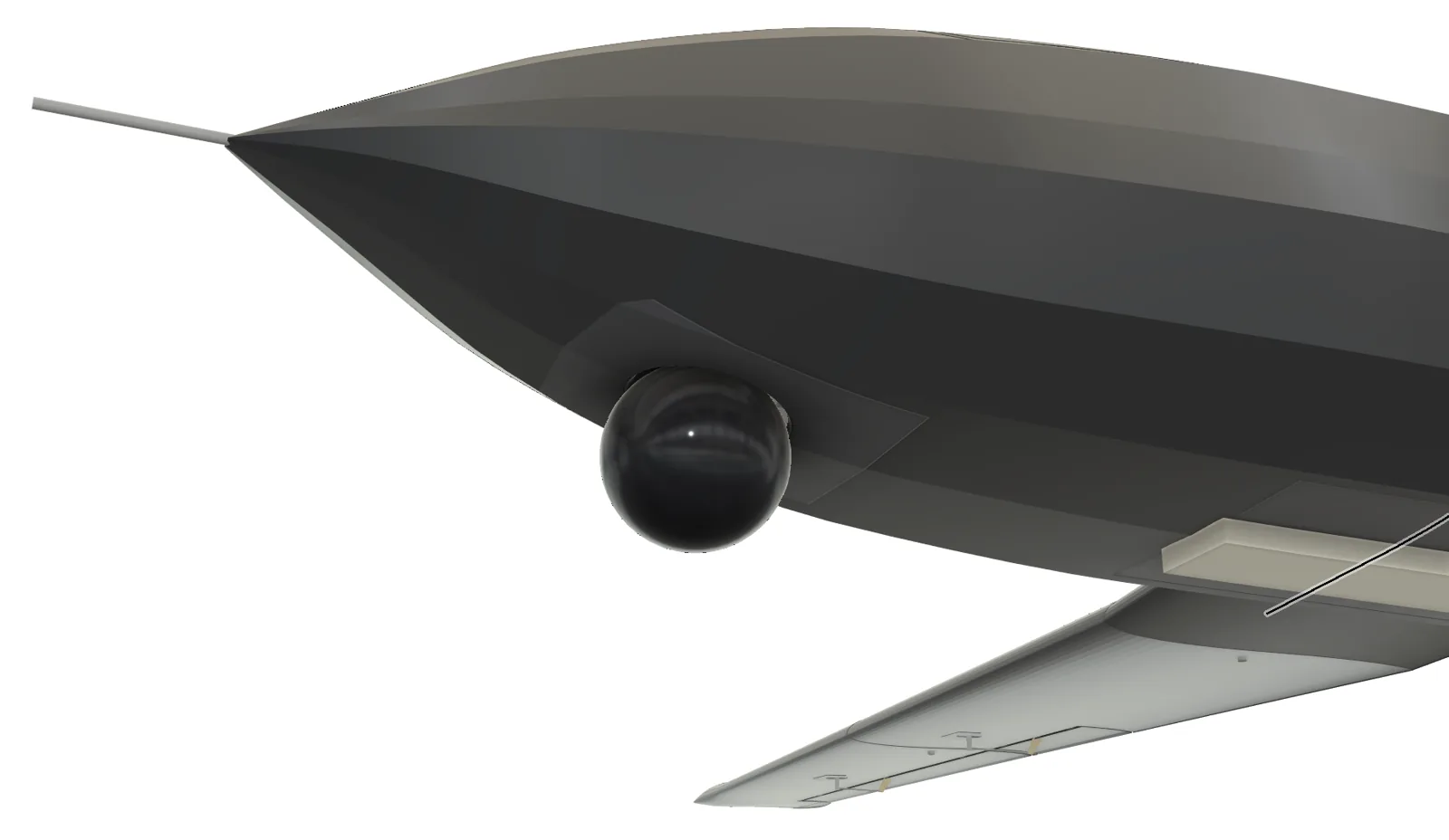
Chin camera
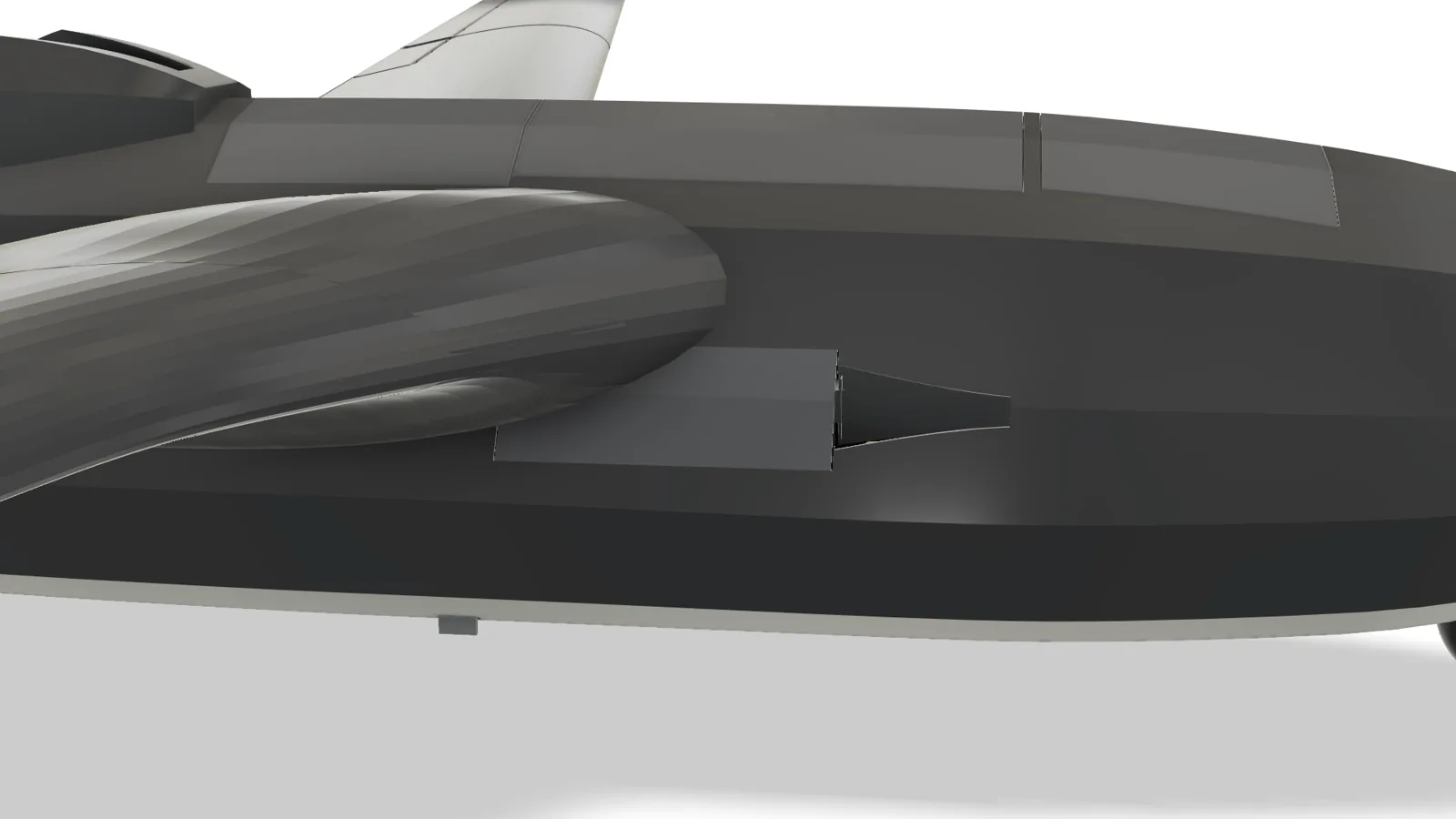
EO/IR gimbal under the nose, with a clear view ahead and below.
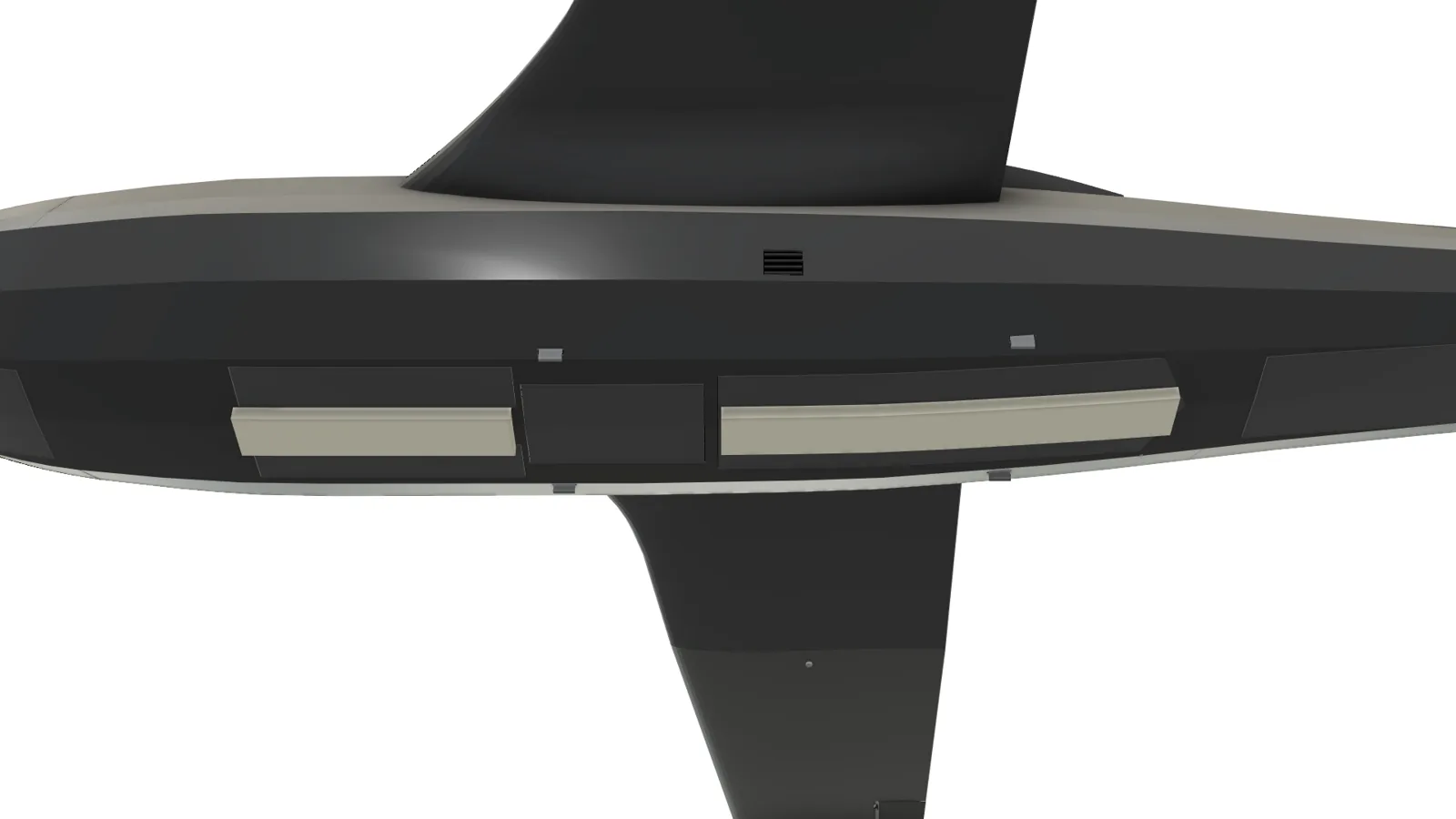
Parachute & airbags
A dorsal parachute and two belly airbags for a soft landing anywhere.
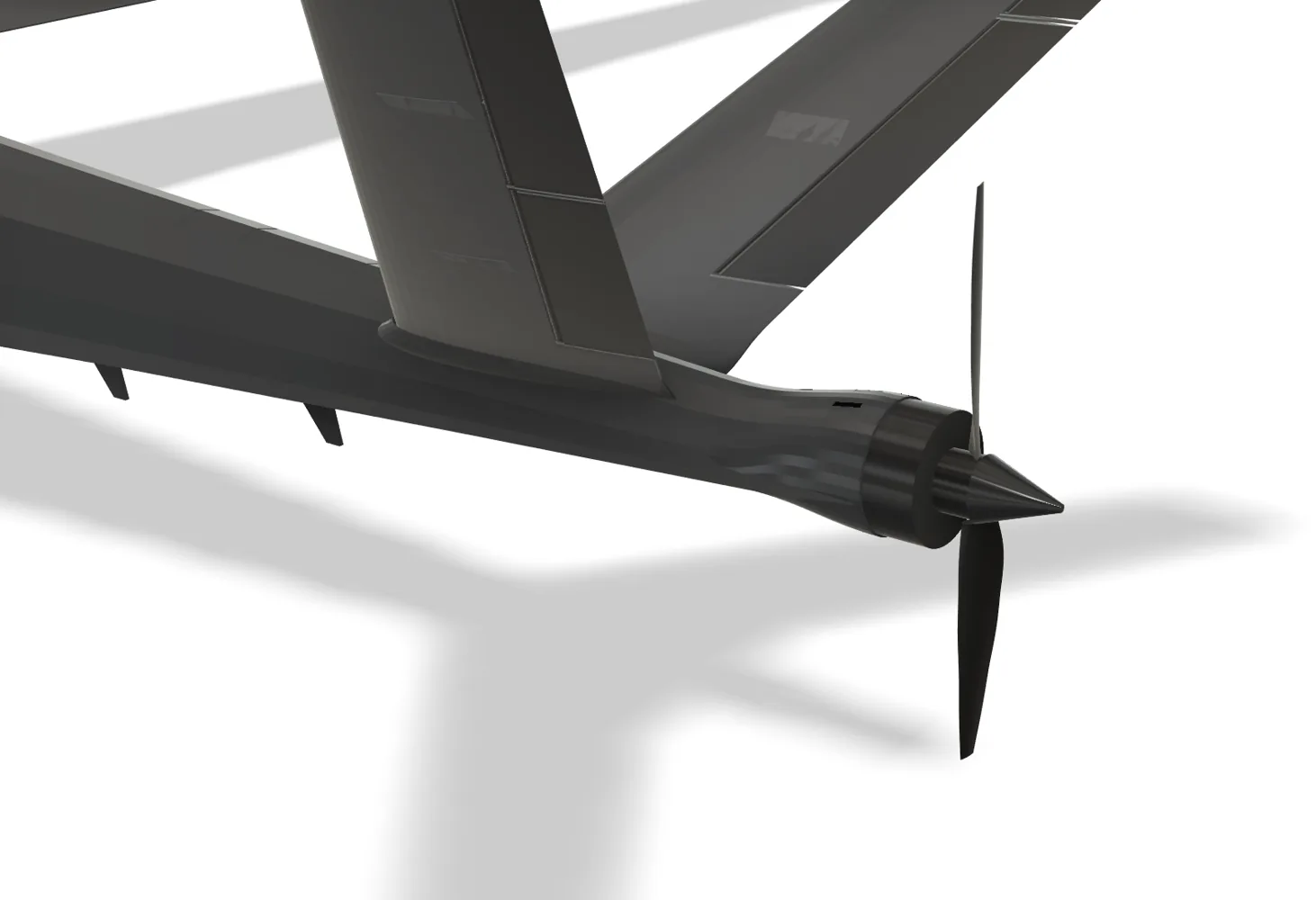
Quick assembly
Nose, body, tail cone, wing and tail panels plug and pin together in the field.
Where time in the air
matters.
Planned Target applications only; no customer agreements are implied.
Inspection, mapping, response
- Pipeline, power-line and rail inspection
- Large-area mapping and survey
- Authorised disaster response and search
Persistent watch
- Border and coastal surveillance
- Catapult launch: no runway needed
- Electric cruise, designed to be quieter than engine-driven UAVs
- Fuel made from domestic ammonia, not imported jet fuel
Two ways to take
VAANVIZHI forward.
Proposed over 24 months in four milestone tranches. The first, ₹1.00 crore, proves repeatable air-fed fuel-cell performance before the aircraft spend begins.
Co-develop long-endurance electric flight
- Sponsored development and joint test programmes
- Co-development of air-fed stacks for aircraft
- Test facilities, airframe build and flight-test collaboration
- Engineering data and design reviews shared under NDA